

Startup profitability is not a late-stage milestone—it is a measurable capital-efficiency system that should be architected from Day 1.
Most founders treat profitability as something that happens “after we scale.” That assumption is expensive. It leads to bloated cost structures, fragile unit economics, and total dependence on external capital.
Here’s the direct answer: Startup profitability means building a repeatable model where unit economics are positive, operating leverage improves over time, and the company can eventually generate consistent free cash flow. It is not about cutting costs randomly. It is about designing a capital-efficient system.
If you understand profitability as a layered financial architecture—not a vanity milestone—you gain strategic control. If you don’t, growth magnifies your weaknesses.
Table of Contents
What Is Startup Profitability (Beyond the Simple Definition)?
At surface level:
A startup is profitable when revenue exceeds total costs.
That’s technically correct. But operationally incomplete.
There are four layers to startup profitability:
| Layer | What It Means | Why It Matters |
| Unit Economics | Each customer generates positive contribution margin | Scaling won’t amplify losses |
| Operating Profitability | Gross profit covers operating expenses | Business model is viable |
| Net Profitability | Company reports positive net income | Sustainable on paper |
| Free Cash Flow | Cash generation exceeds reinvestment needs | True independence |
Many startups hit “net profit” while still burning cash due to working capital timing or aggressive reinvestment. That’s why cash flow matters more than accounting profit.
Institutions like the Harvard Business Review and McKinsey & Company consistently emphasize capital efficiency as a defining characteristic of resilient companies. Profitability is less about optics and more about durability. For more related articles visit our website
Why Startup Profitability Became Critical After 2026
Before 2022, cheap capital changed founder behavior. Growth-at-all-costs dominated.
Then:
- Interest rates rose.
- Venture funding slowed.
- Public markets punished unprofitable growth.
Companies like Shopify and Meta Platforms publicly shifted focus toward margin improvement and operational efficiency.
This wasn’t philosophical. It was structural.
Investors began focusing on:
- Burn multiple
- Revenue per employee
- Gross margin durability
- Path-to-profit clarity
If you’re building in 2026, you’re building in a capital-disciplined environment. That changes everything.
The Startup Profitability Framework (A Systems Model)
This is the core of the article—and the part most generic guides miss.
Layer 1: Unit Economics (The Mathematical Foundation)
If you scale negative unit economics, you accelerate failure.
Key metrics:
| Metric | Formula | Healthy Signal |
| Contribution Margin | Revenue – Variable Costs | Positive and expanding |
| LTV | Avg Revenue × Gross Margin × Retention Duration | High durability |
| CAC | Sales + Marketing Spend ÷ New Customers | Declining over time |
| LTV:CAC Ratio | LTV ÷ CAC | ≥ 3:1 preferred |
| Payback Period | CAC ÷ Monthly Gross Profit per Customer | < 12 months (SaaS ideal) |
Illustrative failure pattern:
- Founder scales ads.
- CAC rises.
- Retention weak.
- LTV collapses.
- Cash burn accelerates.
Revenue increases. Profitability worsens.
That is common.
Layer 2: Operating Leverage
Once unit economics work, operating leverage compounds profitability.
Operating leverage means fixed costs grow slower than revenue.
Examples:
- Engineering team builds once; thousands subscribe.
- AI automates customer support.
- Cloud costs optimized.
This is where modern AI infrastructure plays a role. Many startups in 2024–2026 reduced overhead using automation tools, improving revenue per employee.
Key metric:
| Metric | Why It Matters |
| Revenue per Employee | Efficiency signal |
| Gross Margin | Core product health |
| Cost of Goods Sold (COGS) trend | Margin expansion capacity |
High-margin SaaS can reach 70–85% gross margins. E-commerce operates lower due to inventory costs.
Layer 3: Net Margin Discipline
At this layer, strategy matters more than spreadsheets.
Common profit leaks:
- Bloated middle management
- Over-hiring post-funding
- Low-discipline marketing spend
- Overly generous discounting
Compare models:
- Amazon historically reinvested aggressively but operated with relentless efficiency.
- Mailchimp scaled profitably without VC funding by prioritizing margin control early.
Different strategies. Same discipline.
Layer 4: Cash Flow Independence
Accounting profit is not survival.
Cash flow metrics matter more:
| Metric | Meaning |
| Burn Rate | Monthly net cash loss |
| Runway | Cash ÷ Monthly Burn |
| Burn Multiple | Net Burn ÷ Net New ARR |
| Free Cash Flow | Operating Cash – Capital Expenditures |
Healthy burn multiple: < 1.5
Elite capital efficiency: < 1.0
This metric became widely discussed in venture circles after 2022.
Growth vs Profitability: A False Dichotomy
Many founders frame it incorrectly.
The real question is:
What is your capital strategy?
VC-Backed Strategy
- Optimize for market share.
- Accept temporary losses.
- Must show eventual path to margin expansion.
Bootstrapped Strategy
- Optimize for early cash flow.
- Slower scaling.
- Lower dilution.
The mistake is not choosing growth.
The mistake is growing without eventual economic logic.
How Long Should a Startup Take to Become Profitable?
There is no universal timeline.
But there are patterns.
| Model | Typical Path to Profitability |
| SaaS | 3–7 years |
| E-commerce | 1–3 years |
| Marketplace | Longer due to network build |
| AI SaaS (lean teams) | Potentially faster with automation |
Factors influencing speed:
- Gross margin structure
- Pricing power
- Retention rate
- Capital raised
- Hiring velocity
High gross margin + strong retention = faster profitability.
Case Study: 5-Year Profitability Evolution (Illustrative)
Year 1
- High CAC
- Weak onboarding
- Burn multiple: 2.5
- No pricing power
Year 2
- Improves onboarding.
- Retention increases.
- CAC stabilizes.
Year 3
- Raises prices 10–15%.
- Introduces usage-based tier.
- Reduces cloud waste.
Year 4
- Automation reduces payroll overhead.
- Burn multiple falls below 1.5.
- EBITDA breakeven.
Year 5
- Free cash flow positive.
- Growth funded internally.
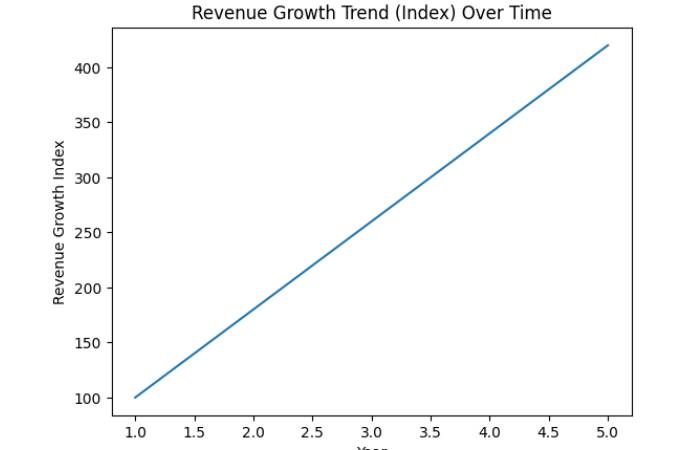
The turning point wasn’t revenue growth. It was retention improvement.
Retention fixes unit economics. Unit economics unlock profitability.
Advanced Metrics Professionals Track
Beyond basics, experienced operators monitor:
| Metric | Insight |
| Net Revenue Retention (NRR) | Expansion strength |
| SaaS Magic Number | Sales efficiency |
| Revenue Concentration | Risk exposure |
| Gross Margin Expansion Rate | Scalability |
| ARR per Employee | Capital efficiency |
Sources like Sequoia Capital’s founder guides and a16z (Andreessen Horowitz) frequently emphasize these as indicators of durable growth.
9 Tactical Levers to Improve Startup Profitability
- Increase pricing gradually with value justification.
- Reduce underperforming marketing channels.
- Improve onboarding flow.
- Optimize cloud and infrastructure spend.
- Shift to usage-based pricing if aligned.
- Shorten CAC payback.
- Increase expansion revenue.
- Delay non-essential hires.
- Automate repetitive operations.
None of these are revolutionary. The power is in sequencing.
Common Myths That Destroy Startup Profitability
Myth 1: “We’ll fix margins later.”
Margins become harder to fix at scale.
Myth 2: “Investors only care about growth.”
Post-2022, capital efficiency matters more than vanity growth.
Myth 3: “More funding solves burn.”
More funding often increases burn expectations.
Startup Profitability in 2026 and Beyond
Trends shaping profitability:
- AI-driven operational compression
- Leaner teams
- Higher scrutiny on CAC efficiency
- Reduced tolerance for negative unit economics
- Hybrid models blending growth + margin focus
The Tech Startup Challenge: Profitability vs Growth
1. Core Strategic Comparison
| Dimension | Growth-First Strategy | Profitability-First Strategy |
| Primary Goal | Market share and rapid scale | Sustainable cash flow |
| Capital Dependency | High (VC-funded often) | Low to moderate |
| Risk Profile | Higher burn, higher upside | Lower burn, steadier growth |
| Hiring Approach | Aggressive scaling | Controlled, efficiency-focused |
| Marketing Spend | Heavy upfront acquisition | ROI-focused channels |
| Investor Appeal | Attractive in large TAM markets | Attractive in capital-tight markets |
| Survival in Downturn | Vulnerable if unprofitable | More resilient |
| Dilution Risk | Higher | Lower |
2. When Each Strategy Makes Sense
| Scenario | Better Approach | Why |
| Winner-take-most market | Growth-first | Speed creates defensibility |
| Strong network effects | Growth-first | Scale strengthens moat |
| Bootstrapped startup | Profit-first | Cash flow is survival |
| Fragmented niche market | Profit-first | No urgent land-grab pressure |
| Capital easily available | Growth-first (disciplined) | Funding supports expansion |
| Funding uncertain | Profit-first | Reduces existential risk |
3. Risk Breakdown
| Risk Area | Growth-First Risk | Profit-First Risk |
| Cash Burn | High | Low |
| CAC Inflation | High exposure | Controlled |
| Over-hiring | Common | Rare |
| Market Capture Speed | Fast | Slower |
| Competitive Threat | Strong moat if successful | Risk of being outscaled |
4. Post-2022 Market Reality (Capital Discipline Era)
| Factor | Pre-2022 Mindset | 2026 Mindset |
| Investor Focus | Revenue growth | Capital efficiency |
| Burn Tolerance | High | Low |
| Valuation Driver | User growth | Margin clarity |
| Key Metric | ARR growth rate | Burn multiple + LTV:CAC |
| Founder Expectation | Scale fast | Scale intelligently |
5. Balanced (Modern) Approach – Disciplined Growth
| Layer | What to Focus On |
| Unit Economics | Ensure LTV > CAC before scaling |
| Retention | Improve before increasing acquisition |
| Operating Leverage | Automate and improve margins |
| Burn Multiple | Keep < 1.5 ideally |
| Cash Flow | Build path to independence |
6. Quick Decision Matrix
| Question | If YES → Lean Toward | If NO → Lean Toward |
| Do we have strong network effects? | Growth-first | Profit-first |
| Are unit economics clearly positive? | Growth (disciplined) | Fix economics first |
| Can we survive 18 months without funding? | Growth acceptable | Prioritize profitability |
| Is market timing critical? | Growth-first | Profit-first |
Conclusion: The Real Answer to Profitability vs Growth
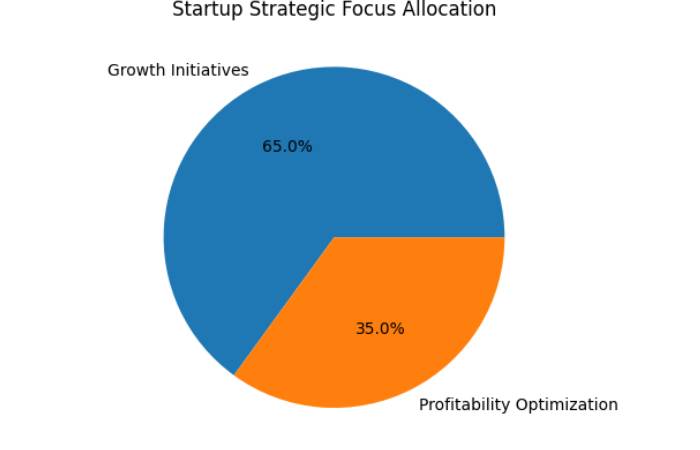
The tech startup challenge is not choosing between profitability and growth. It is designing a system where growth strengthens profitability instead of weakening it.
Growth without economic logic creates fragile companies.
Profitability without reinvestment limits scale.
The modern winning model—especially in the post-2022 capital environment—is disciplined growth:
-
Validate unit economics early.
-
Scale only when LTV comfortably exceeds CAC.
-
Improve retention before increasing acquisition.
-
Monitor burn multiple and revenue per employee.
-
Build toward free cash flow independence.
